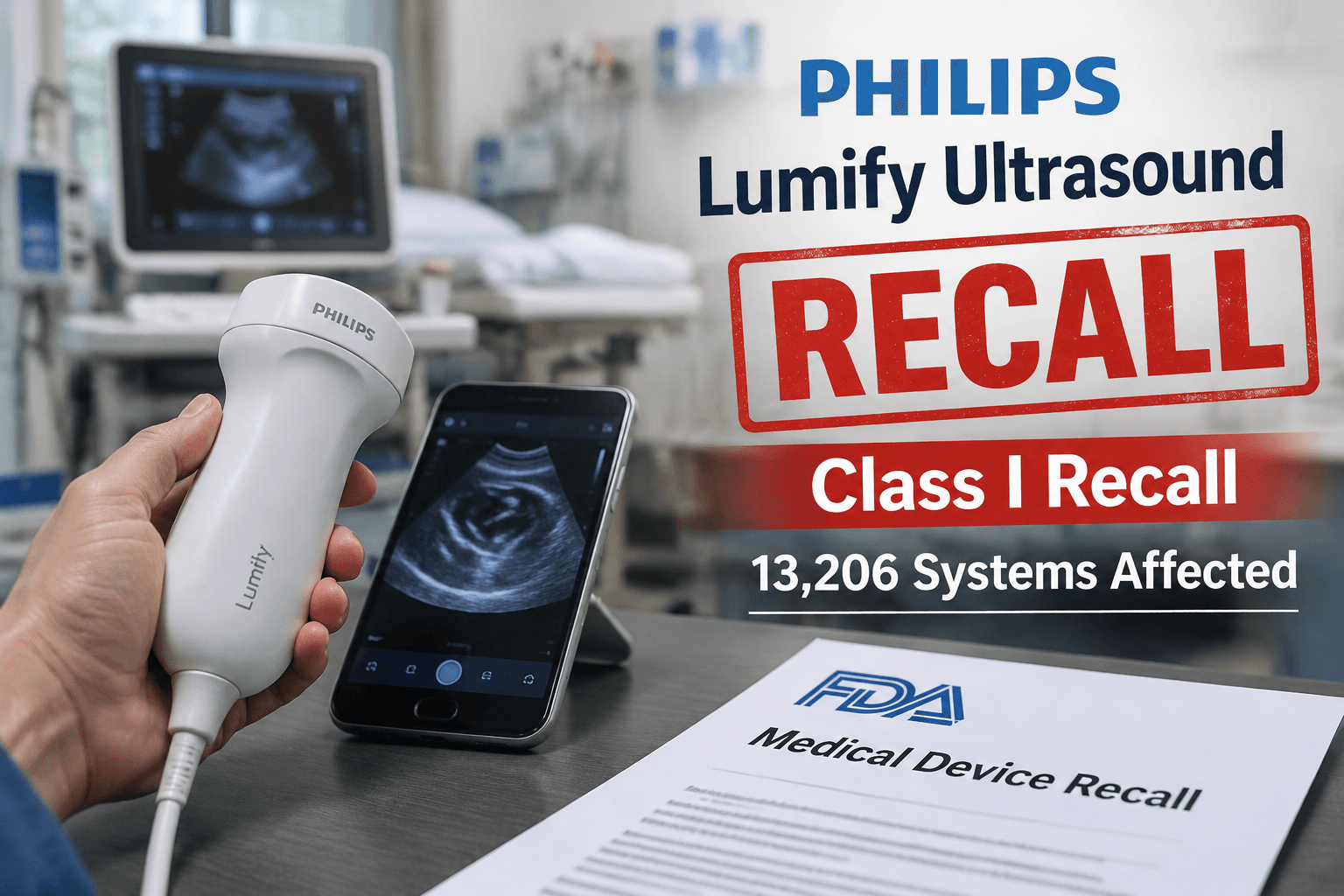
If you are evaluating a used Philips Lumify for a point-of-care fleet, or you are about to standardise on one, a record published by the FDA on 28 October 2026 belongs in your purchase file before any money moves. Philips Ultrasound, LLC initiated a Class I recall of the Philips Lumify Diagnostic Ultrasound System on 24 September 2026, covering 13,206 systems1. This article is not about how the fault is repaired. It is about what the notice says, why the classification matters more than the unit count, and the documents a buyer should demand before signing.
What the FDA record actually says
Everything below comes from the FDA's own device enforcement record for the event, mirrored in the openFDA device/enforcement endpoint as event 99878.2
The notice defines scope by software version, not by serial number, because Lumify is a transducer-plus-application system rather than a single box. That is the most useful line in the whole record — and the one a seller is least likely to volunteer.
Why Class I is a different tier
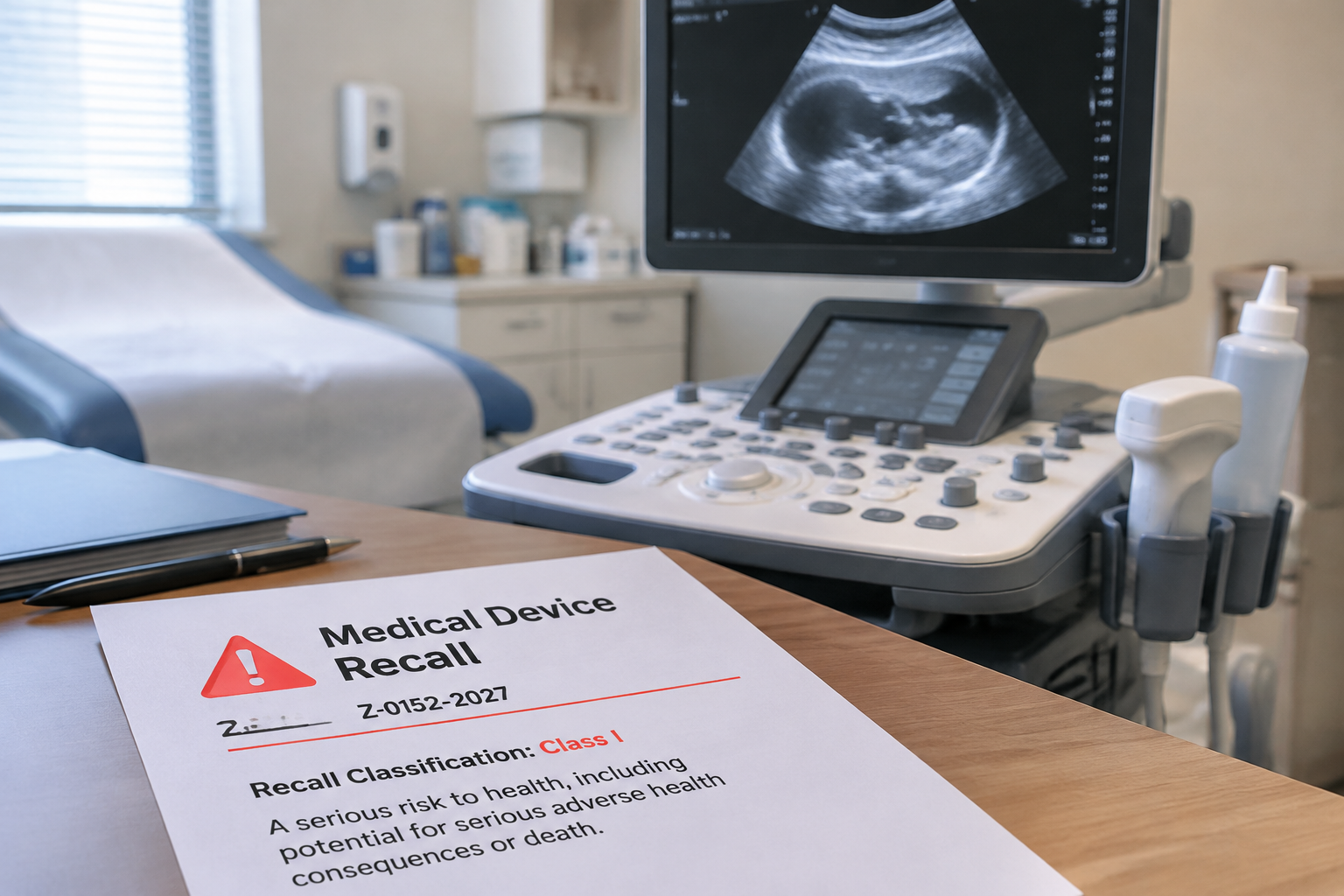
Class I is the FDA's most serious recall classification: a situation in which "there is a reasonable probability that the use of, or exposure to, a violative product will cause serious adverse health consequences or death" (21 CFR 7.3(m)(1))3. Class II covers temporary or medically reversible harm, or serious harm whose probability is remote. Class III is not likely to cause harm at all.
It is also a small share of enforcement records in practice. Across the period from 1 October 2025 to 28 October 2026, openFDA's device enforcement data holds 3,618 records: 3,129 Class II, 432 Class I and 57 Class III4. Restricted to ultrasound product descriptions, the same window holds 38 records, of which 7 are Class I — and Z-0152-2027 is one of them.5
The practical reading for a buyer: the class is the regulator's judgement about the consequence of the failure, not the firm's own assessment of its product. A Class I tag on a handheld system means the FDA accepted that a lost or interrupted scan could plausibly lead to serious harm. That makes the classification a question about where the device will be used, not about whether the seller is trustworthy.
This is the third Lumify recall event in fifteen months
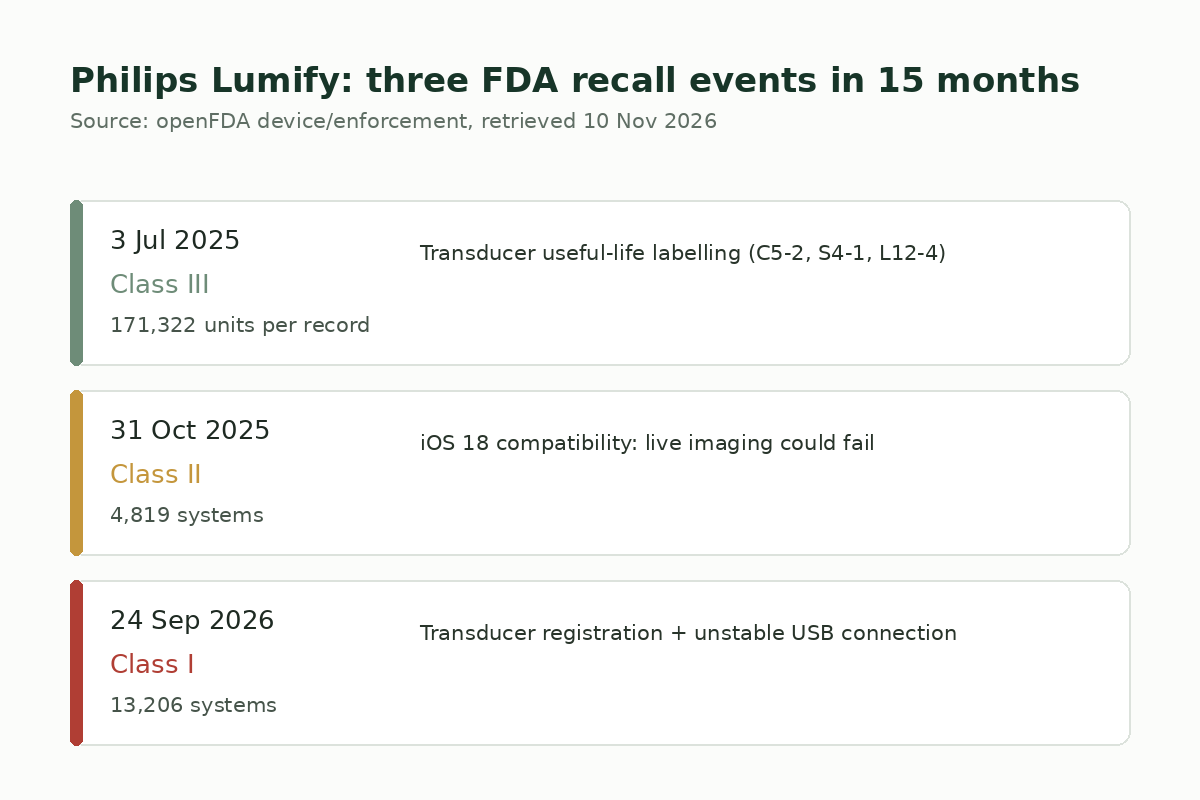
The current notice is not an isolated event. Lumify appears in five FDA enforcement records since July 2025, which resolve to three separate recall events:6
Three events and three different classes in fifteen months. That pattern matters more than any single record: Lumify's performance is coupled to two things the seller does not control at the point of sale — the phone or tablet the application runs on, and the labelling that defines how long a transducer may stay in service. A buyer who checks only the current Class I notice has read a third of the file.
One caution on the July 2025 records: the three entries each state a quantity of 171,322 units, one per transducer model.7 They should not be added together to produce a bigger headline number.
What the two failure modes mean at the point of care
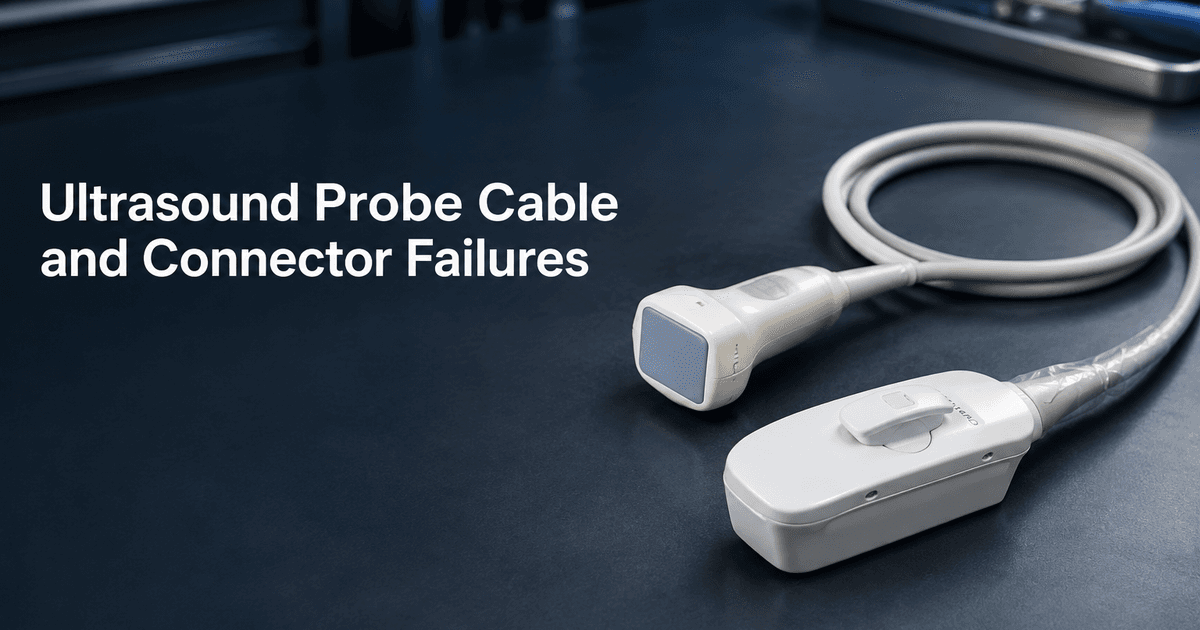
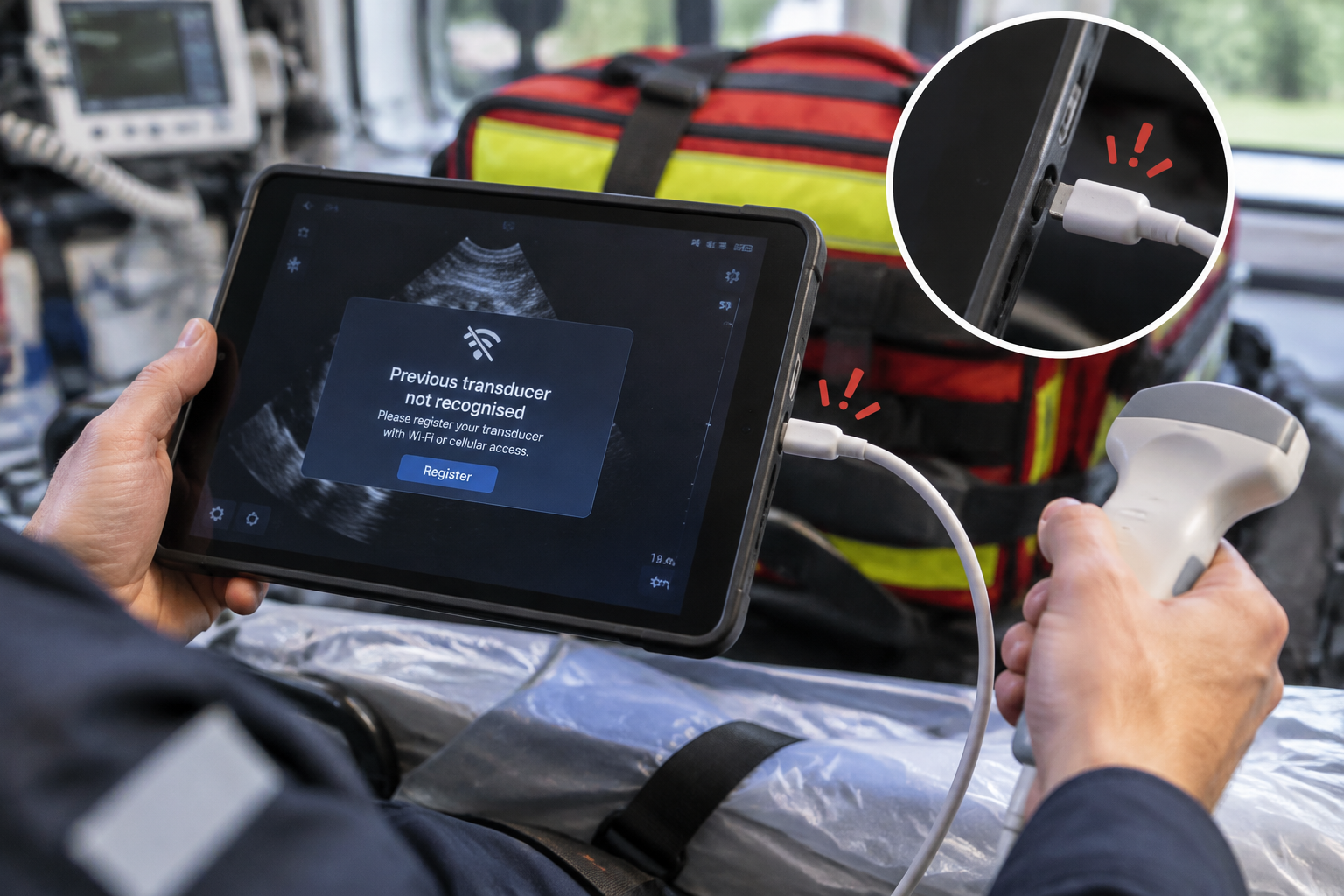
The current record names two distinct faults. First, the system may not recognise a previous transducer registration, which prevents scanning and requires re-registration with Wi-Fi or cellular access — access the FDA notes "may be unavailable outside of the hospital (ambulances/aircraft/field)". Second, at the connection between the transducer USB cable and the tablet or phone, the connection may become unstable or disconnect, disrupting function. The record summarises the consequence of both as diagnosis or treatment delay.8
For procurement, those two have very different weight. A hospital-based user with dependable site Wi-Fi faces a workflow interruption and an administrative task. A prehospital, air-medical or field user faces a functional dependency the device cannot satisfy without connectivity. That is a use-case mismatch, and no discount fixes it — only a documented remediation does.
The version check that decides whether a unit is in scope
The scope block is short enough to check by hand:9
Two artefacts settle it: the UDI-DI on the device label, and a screenshot of the installed software version. Both should sit in the purchase file next to the invoice, with the date they were captured. This is the difference between "this model was in the recall population" and "this unit is in scope" — and only the second decides anything. It is a documentation check, not a repair procedure.
How to price a unit you cannot document
We are deliberately not publishing a dollar figure for an affected Lumify. There is no verified transaction data behind such a number, and a plausible guess would be worse than no number at all. Use a three-state rule instead: documented clean, documented remediated, undocumented. Undocumented is priced as affected, because that is what it is until evidence arrives.
Three cost components exist whether or not the unit can be brought back into service:
- The record does not expire. Any future buyer who searches openFDA will find Z-0152-2027 attached to this product line. Your exit price carries that, so the discount belongs in what you pay now, not in what you hope to recover later.
- Verification is a document chase, not a repair. Field safety notice, remediation evidence, version screenshot — each is a step where an uncooperative seller can simply fail to produce. Price the delay, not the fix.
- 13,206 is the population the firm itself reported. Affected units are not a niche subset of the used market, so "we have never seen one" is not a diligence answer.
Nine questions to put to a seller
- Which platform does the unit ship with — Android (UDI-DI 00884838122116) or iOS (UDI-DI 00884838124141)?
- What software version is installed today, and can you send a dated screenshot of it?
- Was this unit inside recall Z-0152-2027? If you do not know, say so — an unknown answer is a price, not a problem.
- If it was, what remediation was applied, by whom, and on what date?
- Can you supply the field safety notice Philips issued to consignees, by recall number?
- Has the paired tablet or phone ever been replaced, and does the unit hold its transducer registration across that change?
- Do you have dated service records for the USB and connector assembly?
- Is the warranty position different for a recall-affected unit — post-remediation, or as-is?
- Will you state in writing, in the sale contract, that the installed version is outside the affected ranges at handover?
The verdict
Buy — but only on documented terms, and not for field use until the remediation is proven. Three rules follow from the record above. A unit whose version cannot be evidenced is treated as affected, and priced accordingly. A unit that will be used in prehospital, air-medical or austere settings is disqualified until the registration dependency is documented as resolved, because that failure mode is exactly the deployment those users buy for. And "it works, we tested it" is not evidence of anything here: the defect is intermittent by nature and the scope is defined by software version, which is a fact about the unit's paperwork before it is a fact about its behaviour.
None of this argues against Lumify as a category. It argues that on this product line, version and remediation documentation are part of the asset — the same way hours are part of a CT tube's value.
Sources
Every number in this article is either a field value from an FDA enforcement record or a count run against the openFDA API. None is vendor-reported, none is estimated, and none is taken from secondary press coverage; where a figure is the firm's own reported quantity, the text says so. The queries are printed in full so that a buyer can re-run them: all figures were retrieved on 10 November 2026, and because the FDA updates the dataset, a later re-run may return different totals.
Related on MedTrade: ultrasound probe cable and connector failures and how to verify medical equipment suppliers. This article is not a substitute for the field safety notice Philips issued to consignees. Ask the seller or your local distributor for it by recall number.