When most people set out to buy a clinical chemistry analyzer, they start by comparing device prices. That instinct makes sense — but in this equipment category, it leads you straight into the largest procurement trap.
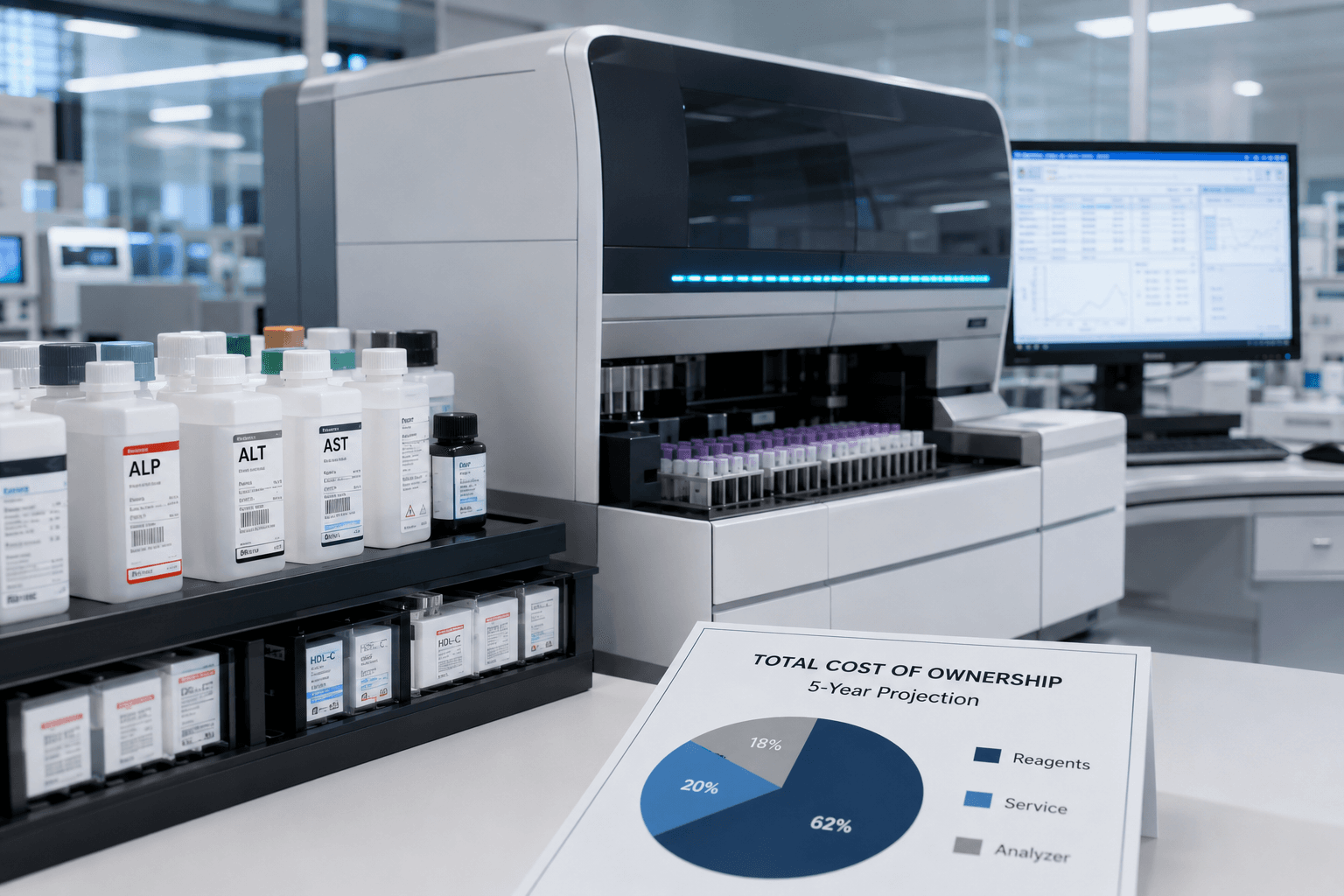
The real cost of clinical chemistry isn't the device. It's the reagents. Over five years, reagent consumption on a typical analyzer costs enough to buy two or three of the same machine. If you compare device prices without modeling reagent spend, you're underwater the moment the contract is signed. Every section of this guide is designed to close that gap — the gap between what the quote tells you and what you'll discover in month seven of operation. (For broader context on how diagnostics procurement is being reshaped, see B2B2C Diagnostics Procurement Trends.)
Defining a Medium-Sized Lab — What Level of Equipment Do You Actually Need?
Daily Sample Volume × Test Menu = Your Real Requirement
"Medium-sized lab" is too vague to base a purchasing decision on. In the clinical chemistry procurement context, it has a specific operating definition: 100–400 routine biochemistry samples per day, running a menu of roughly 20–40 analytes — liver function, renal function, glucose, lipids, electrolytes, cardiac markers, and similar panels.
Labs at this volume share a structural predicament. A high-throughput analyzer (800–1,200 tests/h) is expensive — and not just the device price. Too many reagent positions, excessive daily QC consumption, and a maintenance cadence built for a 1,000-sample workload mean a 200-sample-a-day lab can't keep the machine running cost-efficiently. A low-throughput analyzer (100–200 tests/h) is cheaper — but when the 9 a.m. blood draw tubes are still queued at 11 a.m., the costs show up differently: phone calls from clinicians demanding results, nursing station complaints, the lab director's expression when they walk through at lunchtime. None of those costs appear on any quote.
Here's a practical sizing formula: daily sample volume × 1.2 (buffer factor) × average tests per sample ÷ effective working hours = minimum required throughput (tests/h). Example: 200 samples/day × 12 tests/sample = 2,400 tests. With 4 effective hours during the morning peak, minimum throughput = 600 tests/h. This is a reference value, not a hard specification — but operate below it and you're knowingly accepting peak-hour backlogs.
Benchtop vs Floor-Standing: The Space–Throughput–Budget Triangle
⚠️ Watch Out: Benchtop analyzers typically require manual loading — individual reagent bottles changed by hand, samples loaded one at a time. The throughput number on the spec sheet may look adequate, but if your staffing is one or two technicians, all that manual handling becomes its own bottleneck. Floor-standing units usually include automated sample tracks and refrigerated reagent carousels, spreading the labor cost across more samples. Procurement looks at a purchase order. Operations lives with the staffing budget every single day. Run both numbers.
The 2026 Medium-Lab Procurement Profile
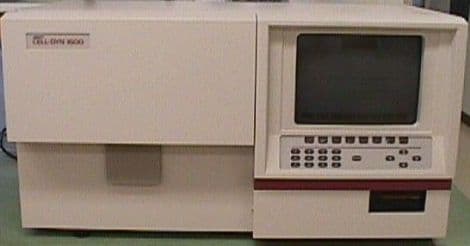
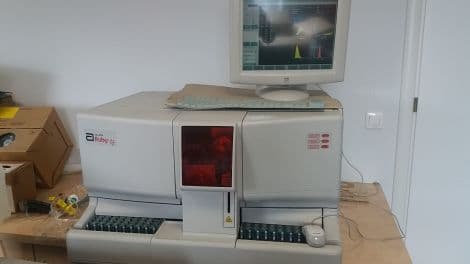
Based on current market patterns, the mainstream configuration for a medium-sized lab in 2026 lands around: 400–800 tests/h throughput, ISE module included, ≥40 reagent positions, support for open-system reagents or at minimum partial third-party compatibility, footprint ≤2 m². If the budget is tight, a refurbished floor-standing unit (3–5 years old) can typically deliver equivalent throughput at 40–60% off the new-unit price — but refurbished equipment terms are far more complex than new (see the TCO section below).
Clinical Chemistry Analyzers in 2026: A Parameter Comparison Framework
Throughput, Reagent Positions, and ISE — the Three Parameters That Define Daily Operation
A clinical chemistry analyzer spec sheet lists dozens of numbers. For a medium-sized lab, three of them determine what daily life actually feels like:
- Throughput. Manufacturers quote "maximum throughput (including ISE)." The ISE (ion-selective electrode) module measures Na⁺, K⁺, and Cl⁻ — it's fast, uses no reagent, and the tests it generates pad the throughput figure. During procurement, ask one specific question: "What is the photometric throughput, excluding ISE?" If the answer is evasive, you can reasonably conclude the headline number has water in it.
- Reagent positions. This determines how many different tests can be live on the instrument simultaneously. A 24-position analyzer running a 30-test menu means daily reagent swaps — unmount the old reagent, recalibrate, mount the new one. That's 20–30 minutes of technician time every day. Medium-sized labs should aim for ≥40 refrigerated reagent positions.
- ISE module. Called out separately because some manufacturers treat it as standard, others as a paid add-on. Without ISE, you'll need a separate electrolyte analyzer — which means a second QC routine, a second service contract, and another footprint on the bench.
Open System vs Closed System: The Hidden Cost of Reagent Lock-In
A closed-system analyzer uses software locks or proprietary reagent packaging (RFID chips, barcodes) to restrict the instrument to manufacturer-branded reagents only. The standard pitch is "ensuring result accuracy and traceability" — and that's not false. OEM reagents are validated through the manufacturer's full quality system.
Here's what the pitch leaves out: when you agree to a closed system, you hand over the next 5–7 years of your reagent purchasing power to a single supplier. Device prices can be shopped across vendors. Reagent prices, once locked in, rise at whatever rate the manufacturer decides — not at whatever rate the market would otherwise dictate.
An open system lets you run third-party reagents. Reagent purchasing is competitive — you can negotiate, switch suppliers, compare bids. The trade-off: you're responsible for your own QC and calibration. Traceability between third-party reagents and the manufacturer's calibrator set, lot-to-lot variation, and interferent robustness (hemolysis, lipemia, icterus) all need to be verified by your lab.
💡 Expert Insight: If you choose an open system, the most critical procurement action isn't comparing reagent prices — it's buying a complete QC and calibrator package at the same time you buy the instrument. The real cost of an open system isn't whether the reagents are cheap. It's whether your QC program is solid enough to back them up. An open system without a QC program is running without a safety net.
Parameter Comparison Framework
No rankings, no endorsements. The table below covers the objective specification dimensions a medium-sized lab should evaluate (using 400–800 tests/h floor-standing analyzers as the reference class):
Before you look at the parameter table, there's something more important than throughput, more important than reagent positions, more important than brand reputation. Most buying guides bury it. It gets its own section.
Reagent Compatibility — the Cost Black Hole Nobody Talks About During Procurement
OEM Reagents vs Third-Party Reagents: Price Gaps, QC Risk, and Regulatory Reality
The price difference between OEM and third-party reagents varies by analyte. For routine chemistry panels — glucose, lipids, liver enzymes — the spread can reach 40–70%. But the price gap is only the first layer.
The second layer is QC cost. When OEM reagents, calibrators, and control materials come as a matched set, the manufacturer has already done most of the validation — you run daily internal QC per the package insert and you're covered. Switch to third-party reagents, and you need to additionally verify: ① traceability of the third-party reagent against the OEM calibration system; ② bias between the third-party and OEM reagent on identical patient samples; ③ interferent robustness — stability under hemolyzed, lipemic, and icteric conditions. Each of these verification steps is appropriate and necessary. But they consume time, reagents, and reference sample costs. Running an open system without performing these verifications means operating at the edge of regulatory exposure.
The third layer is regulatory. ISO 15189 — the international standard for medical laboratory quality and competence 1 — requires method validation records for every reagent change, with full traceability from reagent lot to patient result. CAP (College of American Pathologists) and national EQA programs require the same. If a reagent change causes an EQA failure, the consequence can be suspension of clinical reporting authority for that analyte — which, in any regulatory jurisdiction, is a serious incident for the laboratory.
Cold Chain and Shelf-Life Management — Can Your Lab Handle It?
OEM reagents typically arrive with end-to-end cold-chain documentation from manufacture to delivery. Third-party reagent cold chain depends on the supplier. If a reagent ships from overseas through multiple intermediaries before reaching your lab, any cold-chain break means the expiry date on the label may no longer be the real expiry date.
⚠️ Watch Out: Reagent shelf life is what the seller states it is — never promise a specific shelf-life duration in your procurement contract or assume it. Before purchasing, obtain written confirmation from the supplier of the production date and expiry date for each reagent batch, especially for third-party reagents shipped internationally. If a supplier refuses to provide batch-level expiry information — find another supplier.
Bundled Contract Traps: "Free Device With Reagent Commitment"
"Buy 5 years of reagents, get the analyzer free." "Sign a 3-year reagent contract and the device is half price." These bundled deals sound compelling, but you need to run two calculations:
First: (bundled reagent unit price × estimated annual volume × contract years) vs (full device price + open-market reagent price × same volume × same years). If the bundled option is cheaper, move to the second calculation.
Second: Is there a minimum annual purchase volume clause? What's the penalty for not hitting it? If reagent prices increase during the contract term, what's the ceiling? If any of these three questions lacks an explicit written answer, you haven't signed a procurement contract — you've signed an open-ended risk exposure.
Refurbished vs New: A 3-Year TCO Comparison for Clinical Chemistry Analyzers
The Hidden Terms in a Refurbished Purchase: Service Coverage, Calibration, Software Licensing
A refurbished clinical chemistry analyzer typically sells for 40–60% of the equivalent new-unit price. But three things matter more than that discount:
- Service contract scope. Does the annual service contract cover the light source lamp, cuvette set, sample probe, and ISE electrodes? These four are the highest-frequency wear/failure components. If the contract is "basic technical support" (parts not included), you need to separately estimate the annual replacement cost of each.
- Calibration service. Who performs the initial post-installation calibration, to what standard, and with what documentation? If the seller says "the unit passes its self-test on startup, that's enough" — that machine likely hasn't seen a traceable calibration. Calibration requires certified reference materials (CRM or NIST-traceable calibrators). Pressing the power button is not calibration.
- Software licensing. The analyzer's operating software and LIS interface drivers (ASTM/HL7) are typically licensed per device serial number and are non-transferable. Whether a refurbished unit's software license is legally usable — ask the manufacturer's local subsidiary or authorized service provider, not the seller. Without a valid software license, you've bought a machine that requires manual keyboard entry for every result.
💡 Expert Insight: Buying refurbished clinical chemistry analyzers isn't a bad decision — the refurbished market in this category is genuinely mature, and many 3–5-year-old floor-standing units deliver throughput and stability comparable to new. But separate the equipment vendor from the service provider. Buy the device from one supplier. Sign the service contract with a different, manufacturer-authorized independent service provider. Do not let the same company that sold you the refurbished unit also hold your exclusive service contract. This isn't about trust. It's about procurement structure: two suppliers with counterbalancing interests keep your risk covered.
Refurbished + Third-Party Reagents vs New + OEM Reagents: 3-Year Total Cost
Below is a 3-year TCO comparison for a medium-sized lab (200 samples/day, 12 tests/sample). Figures are industry estimation models — actual values vary by instrument model, test menu, and reagent procurement strategy:
⚠️ Watch Out: This table is not telling you to pick the cheaper option. It's showing you that the refurbished path saves on device cost but demands higher QC spending, while the new-equipment path costs more upfront but may see reagent bills double within five years. There is no universally optimal choice — only the choice that fits your lab's staffing depth and QC capability.
Browse clinical chemistry analyzers and reagents listed on the platform. Send inquiries to multiple credential-verified suppliers simultaneously and compare device quotes and service terms side by side.
👉 Search for clinical chemistry analyzers and reagents on MedTrade →
[Deep Dive] After the Purchase: Installation, Training, QC, and Compliance
Pre-Installation Site Preparation: Water, Waste, and Power — the Forgotten Upfront Costs
A clinical chemistry analyzer does not run by being plugged into a wall socket. Three site conditions must be confirmed before the device arrives:
- Water purification system. A photometric analyzer consumes 10–30 L/h of deionized water. If your lab's existing water purification system doesn't have enough capacity — or the plumbing doesn't reach the intended installation spot — the choice is upgrade the water system (additional $2K–$8K) or manually refill the water reservoir every day (~30 minutes of technician time daily). Run this calculation before signing the equipment contract.
- Waste disposal. The analyzer's liquid waste — reaction mixture, wash solution, ISE waste — is not regular drain-compatible. It needs a dedicated waste line and collection container. Confirm the lab's existing waste handling is compliant.
- Voltage-stabilized power + UPS. The photometric system in a clinical chemistry analyzer is sensitive to voltage fluctuation. An online UPS (uninterruptible power supply) isn't just for blackouts — it's to prevent calibration drift from voltage instability. A power outage you can see. Voltage fluctuation-induced QC failures can take three months to diagnose.
QC and EQA: Turning the Instrument On Is Step One. Staying Compliant Is the Rest.
Getting the instrument running is not the same as being legally authorized to report patient results. Two things need to happen:
- Internal QC. At least two concentration levels (normal + abnormal) of control material run daily, with results falling within Westgard Rules acceptance limits. Whether the analyzer has built-in automatic QC rule evaluation and out-of-control alerts — this is a key procurement selection criterion. Without built-in QC adjudication, technicians have to manually log results, hand-draw Levey-Jennings charts, and visually inspect for rule violations. For a medium-sized lab running dozens of analytes daily, that manual QC workflow is unsustainable.
- EQA / Proficiency Testing (PT). An external organization (CAP, national or regional EQA provider) periodically sends blind samples. Your results are compared against peer laboratories running the same methods. Two consecutive EQA failures can result in suspension of clinical reporting for that analyte.
Four Clauses You Must Read Word-for-Word in the Service Contract
⚠️ Watch Out: As with other lab equipment procurement, clinical chemistry analyzer service contracts carry four deep-water clauses:
- Onsite Response SLA definition. "24-hour response" does not mean "engineer at your door within 24 hours." Confirm whether it means Phone Response (someone answers) or Onsite Arrival (a qualified engineer physically reaches your facility). The lab being down for a day = all routine chemistry stopped = sample outsourcing costs + clinical complaints.
- Light source lamp and cuvette coverage. These two are the highest-frequency consumable-wear components on a chemistry analyzer. Lamp life is typically 2,000–4,000 hours (roughly 6–12 months). A "full-coverage" contract that excludes the lamp is not full coverage.
- ISE electrode replacement frequency and coverage. ISE electrodes are consumables — lifespan 3–12 months depending on usage volume. The price difference between contracts that include and exclude electrode replacement is substantial.
- Software upgrades / LIS interface changes. When the hospital upgrades its HIS/LIS system, who pays for re-adapting the analyzer's interface driver — this must be in the contract.
Reagent Procurement Strategy — Controlling Consumables Cost Without Sacrificing Quality
Bulk Purchasing vs JIT: Balancing Inventory Holding Cost Against Stockout Risk
Reagents don't get cheaper the more you buy — not in a simple way. Clinical chemistry reagents have limited onboard stability and open-vial shelf life. Most liquid reagents, once opened and placed onboard under refrigeration, remain stable for 30–60 days; some enzyme-based reagents are shorter. Buying a three-month supply might save 10–15% on unit price — but expired-stock write-offs can consume the entire discount and then some.
Recommended strategy: high-volume routine assays (liver panel, renal panel, glucose, lipids) — monthly purchasing. Low-volume specialized assays (cardiac markers, specific proteins, therapeutic drug monitoring) — on-demand purchasing. Routine panels have high, predictable volume and negotiation leverage. Low-volume assays are more sensitive to shelf-life constraints and turn over slowly — the extra unit cost of on-demand purchasing is usually far smaller than the write-off cost of expired stock.
Multi-Supplier Strategy: Don't Put All Your Reagent Eggs in One Basket
💡 Expert Insight: Relying on a single supplier for all reagents is structurally equivalent to signing a blank check. Maintain a minimum of two active reagent suppliers. The primary supplier handles the high-volume routine assays (~70% of purchase volume, where pricing is negotiable). The backup supplier covers gap-fill on routine assays plus the low-volume specialized menu (~30% of volume, keeping the relationship active). When the primary supplier raises prices beyond an agreed threshold, the backup supplier can absorb the full volume without transition friction. This isn't about trust. It's about structural leverage — a principle every professional procurement operation builds in by default.
Platform Reagent SKU Aggregation — Match Compatible Reagents by Analyzer Model
MedTrade lists over 1,200 clinical chemistry analyzer-related products 2, spanning Hitachi, Siemens, Roche, Olympus, Mindray, Horiba, and other major brands. You can search for compatible reagents and consumables by analyzer brand and model — the system matches listings, then you send inquiries to multiple credential-verified suppliers simultaneously.
Three reasons this changes the procurement workflow: ① Instead of calling suppliers one by one to ask "do you carry reagents compatible with model X," you search once and see all matches. ② Multi-supplier quoting happens in parallel — same format, side-by-side comparison, no chasing individual sales reps for PDFs. ③ Each supplier's Verified Supplier credential badge is visible directly on their profile — independently reviewed by the platform, not a self-claimed PDF attachment.
👉 Search compatible reagents by analyzer brand and model →
Summary: Six Procurement Principles for Clinical Chemistry in Medium-Sized Labs
- Size the throughput requirement before choosing an equipment tier. Daily volume × 1.2 × tests per sample ÷ peak hours = minimum throughput. Skip this calculation and compare device prices directly, and you'll end up with either a bottleneck or a machine that's too expensive to run at your volume.
- A closed system means surrendering 5 years of reagent negotiating power. The open-vs-closed decision has a larger TCO impact than which brand you pick. The prerequisite for an open system is QC capability — without it, don't go open.
- Handle refurbished-device software licensing and service contracts separately. Refurbished equipment can be a smart purchase, but software license validity must be confirmed with the manufacturer or its authorized service provider — not the seller — and the service contract should come from a different provider than the equipment vendor.
- Reagent TCO dominates device TCO. Over a 5-year lifecycle, reagents account for 45–55% of total cost; the device itself is only 25–35%. Spend 80% of your procurement negotiation time on the reagent terms, not the device discount.
- Maintain at least two reagent suppliers. Structural leverage in reagent purchasing isn't optional. It's the foundation of cost control.
- Complete the site-preparation assessment before signing the equipment contract. Water purification, waste disposal, voltage-stabilized power, and LIS interface readiness — any one of these four going wrong delays go-live by at least 2–4 weeks after the device arrives.
Ready to compare equipment and reagent options? Search MedTrade for clinical chemistry analyzers and compatible reagents. Send inquiries to multiple verified suppliers simultaneously. When the quotes come back, compare device price, service contract terms, and reagent unit costs side by side — not as separate decisions.
👉 Search for clinical chemistry analyzers and reagents on MedTrade →