
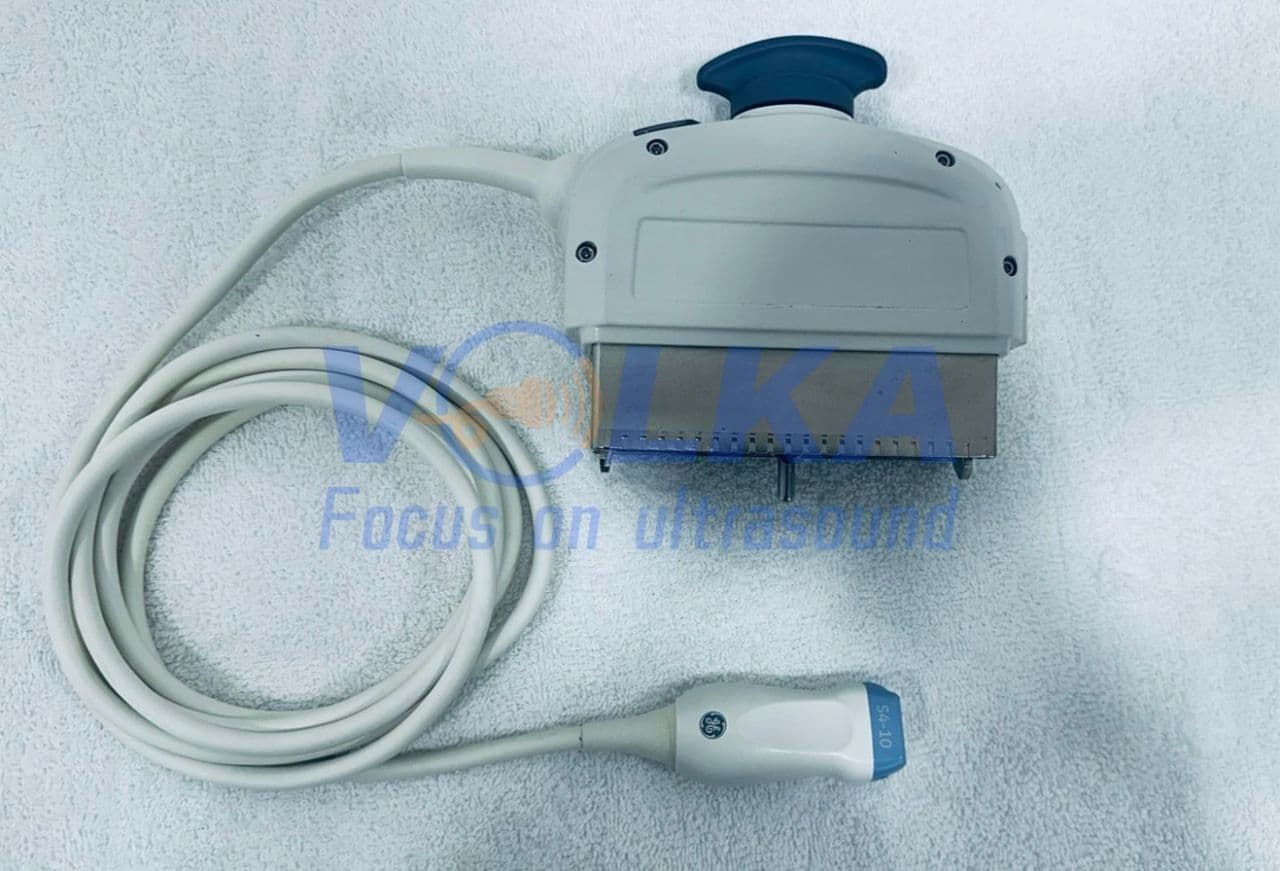
GE S4-10-D Phased Array Ultrasound Probe for LOGIQ & Voluson Systems – Pediatric Cardiology, Neonatal and Small Parts Imaging

Public supplier signals are visible here. Send an inquiry when the listing looks commercially fit.
Product Details
Product Overview
The GE S4-10-D is a broadband phased-array transducer engineered for pediatric cardiology, neonatal imaging and specialized cardiac applications.
Its compact footprint and high-frequency bandwidth allow clinicians to obtain excellent image quality in neonates, infants and pediatric patients while maintaining strong Doppler performance.
Key Benefits
✓ High-frequency phased-array technology
✓ Excellent pediatric cardiac imaging
✓ Optimized neonatal visualization
✓ Strong Color Doppler sensitivity
✓ Compact acoustic footprint
✓ Reliable clinical performance
✓ Superior small-patient imaging
Common Customer Pain Points
When purchasing a replacement GE S4-10-D, buyers are usually concerned about:
High-risk issues include:
- Crystal element dropout
- Weak Color Doppler sensitivity
- Poor sector uniformity
- Cardiac image artifacts
- Reduced penetration depth
- Cable fatigue damage
- Connector communication failures
- Probe recognition errors
- Housing wear
- Unexpected equipment downtime
For pediatric cardiology departments, consistent image quality is critical for accurate diagnosis and patient care.
Comprehensive Testing Before Shipment
Every GE S4-10-D undergoes complete inspection and operational verification before shipment.
Testing Includes
| Inspection Item | Verification |
|---|---|
| Crystal Performance | Fully Tested |
| B-Mode Imaging Quality | Verified |
| Color Doppler Function | Tested |
| PW Doppler Function | Verified |
| Cardiac Imaging Quality | Tested |
| Sector Uniformity | Verified |
| Penetration Performance | Checked |
| Connector Integrity | Inspected |
| Cable Condition | Evaluated |
| Overall Functionality | 100% Operational |
Before shipment, customers receive:
✓ Real testing images
✓ Live testing videos
✓ Functional verification confirmation
Clinical ApplicationsPediatric Cardiology
- Congenital heart disease assessment
- Pediatric echocardiography
- Cardiac function evaluation
- Doppler flow assessment
Neonatal Imaging
- Neonatal cardiac examinations
- NICU ultrasound studies
- Neonatal cranial imaging
- Bedside assessments
Adult Cardiology
- Basic echocardiography
- Cardiac chamber evaluation
- Doppler blood-flow analysis
Small Parts Imaging
- Pediatric abdominal imaging
- Superficial organ evaluation
- Specialized pediatric studies
These applications are consistently listed across GE and distributor documentation.
Compatible GE Ultrasound Systems
Common compatible systems include:
- GE LOGIQ E9
- GE LOGIQ S6
- GE LOGIQ S7
- GE LOGIQ S8
- GE Voluson E6
- GE Voluson E8
- GE Voluson E10
Compatibility may vary according to software version and system configuration.
Technical Specifications
| Parameter | Specification |
|---|---|
| Product Name | GE S4-10-D |
| Brand | GE Healthcare |
| Probe Type | Broadband Phased Array Transducer |
| Array Type | Sector Phased Array |
| Frequency Range | 4 – 10 MHz |
| Footprint | 20 × 15 mm |
| Scan Angle | 90° |
| Applications | Pediatric Cardiology, Neonatal, Small Parts |
| Imaging Modes | B-Mode, Color Doppler, PW Doppler, CW Doppler |
| Clinical Specialty | Pediatric & Neonatal Imaging |
| Connector Type | D Connector |
| Compatible Systems | LOGIQ E9, S7, S8, Voluson E6, E8, E10 |
| Condition | Original Used |
| Testing Status | 100% Fully Tested |
| Warranty | 60 Days |
| Return Policy | 7-Day Return or Exchange |
| Delivery Time | 2–4 Business Days |
| Shipping Method | DHL / FedEx / UPS |
Why the GE S4-10-D Is Popular
| Clinical Requirement | S4-10-D Advantage |
|---|---|
| Pediatric Cardiology | Excellent image detail |
| Neonatal Imaging | High-frequency resolution |
| Small Acoustic Windows | Compact footprint |
| Doppler Assessment | Strong flow sensitivity |
| NICU Applications | Bedside versatility |
| Diagnostic Confidence | Reliable phased-array performance |
The GE S4-10-D remains highly valued because it combines pediatric cardiac performance, neonatal imaging capability and high-frequency phased-array technology in a single versatile transducer.
More from Probesources
More in Ultrasound Transducer
Related editorial coverage
Ultrasound Transducer Common Failure Modes: How to Diagnose, Repair, or Replace
Ultrasound probe image problems? Diagnose lens delamination, oil leaks, cable damage & element dropout. Repair vs replace framework + find repair services on MedTrade.
AI Medical Imaging 2026: What the Clinical Data Actually Says
A data-driven look at AI radiology in 2026: the largest RCT ever conducted, why models crash across populations, and the ROI gap no one talks about.
Ultrasound Transducer Buying Guide 2026: New vs Refurbished, Brand Comparison & What to Check Before You Buy
New vs refurbished ultrasound probes: GE, Philips, Siemens, Samsung compared. Covers compatibility, repair costs, and supplier verification.