
ESAOTE S-scan MRI System | Includes RF Pavilion | 0.25T Open MRI | Software V3.1 E-MRI Brio

Public supplier signals are visible here. Send an inquiry when the listing looks commercially fit.
Product Details
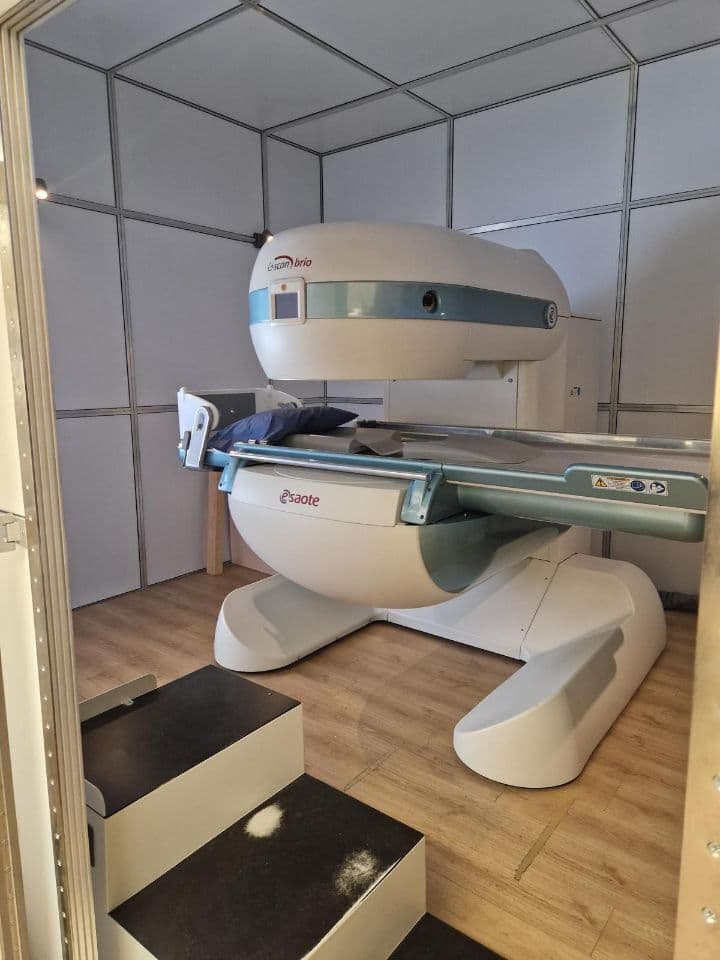
Product Overview This is a highly efficient 2012 ESAOTE S-scan, a dedicated MRI system optimized for musculoskeletal (MSK) imaging, including the spine and all joints. Utilizing a 0.25T Permanent Magnet, this system eliminates the need for liquid helium, significantly reducing long-term operational costs. Sourced from a working clinical environment, it represents a cost-effective imaging solution for orthopedic clinics and sports medicine centers.
Technical Specifications
| Field | Specification |
| Manufacturer | ESAOTE |
| Model / Type | S-scan (Dedicated MSK MRI) |
| DOM / Year | 2012 |
| Magnet Type | 0.25T Permanent Magnet (Maintenance Free) |
| Software Version | 3.1 E-MRI Brio |
| Included Accessories | RF Pavilion (Shielding Room) Available |
| Condition | Excellent Clinical Condition / Deinstalled from Working Site |
Included Coil Suite (Comprehensive MSK Package)
- Spine Coil (Cervical, Thoracic, Lumbar)
- Shoulder Coil
- Knee/Foot/Ankle Coil
- Hand/Wrist Coil
- Flex/Multi-purpose Coils
Quality & Condition
- Magnet Stability: Permanent magnet ensures consistent field homogeneity without cryogenic monitoring.
- Imaging Performance: Optimized for high-contrast MSK diagnostic sequences; software R3.1 Brio provides an intuitive workflow.
- RF Pavilion: Shielding integrity verified; structural components included for relocation.
- Operational Status: Meets all original OEM Specifications; fully tested prior to de-installation.
More from Pro Imaging
More in MRI Scanner
Related editorial coverage
Ultrasound Transducer Common Failure Modes: How to Diagnose, Repair, or Replace
Ultrasound probe image problems? Diagnose lens delamination, oil leaks, cable damage & element dropout. Repair vs replace framework + find repair services on MedTrade.
AI Medical Imaging 2026: What the Clinical Data Actually Says
A data-driven look at AI radiology in 2026: the largest RCT ever conducted, why models crash across populations, and the ROI gap no one talks about.