TestDynamics raises $9M in a Series A round led by Healthier Capital, with strategic participation from Cedars-Sinai Technology Ventures1.
The company says the money goes to the clinical team that validates algorithms on real patient data, to deployments at more health systems, and to new imaging subspecialties2.
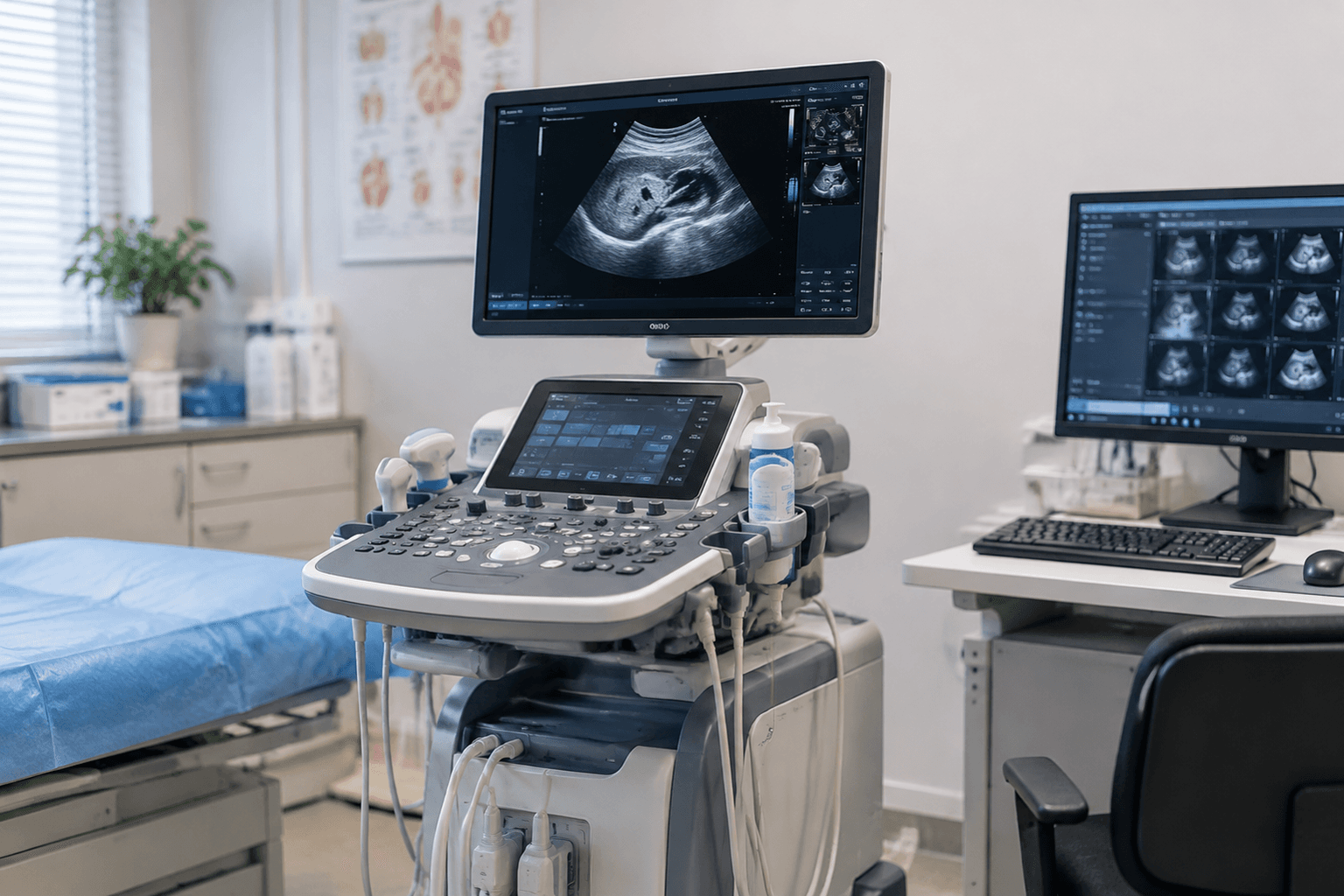
That is a funding story, not a device alert. It belongs in a used-equipment buyer's file anyway, because the layer only works through the scanner under it. No DICOM output, no AI.
The round, in facts
The wording repays a second read. The page announces "$9 million in funding", with Healthier Capital leading "the Series A round"; trade coverage calls it "$9 million in Series A funding" and places the company in Austin, Texas4.
Neither says whether the $9 million is the whole round or a first close, and neither gives a valuation or a price.
In the company's description, Satori runs a hospital's imaging AI as one program: one agreement, one connection, one view.
Tools are tested on the customer's own patient data before commitment, and a tool that misses pre-agreed goals is replaced under the same agreement5.
That last clause is a contract term, and contract terms are the part a buyer can verify.
What the FDA record does and does not show
The FDA has authorized over 1,600 AI-enabled medical devices for marketing in the United States as of September 20266. A department choosing among cleared tools has no shared scoreboard, only the claims of the companies selling them.
A search of openFDA's 510(k) database for applicant "TestDynamics" returns no records (query run 23 November 2026)7.
That is not proof of no clearance under another legal name, but it puts Satori on the infrastructure side of the line rather than the cleared-device side.
What it changes at the point of purchase
A recurring line in ownership cost. Our model of refurbished ultrasound ownership splits the bill into asking price, probe reserve, service cover and downtime (the four lines)8.
A per-site AI agreement behaves like service cover: it renews whether or not you scan, and it does not travel with a used scanner the way a probe does. If a unit cannot feed the layer, its price against our listing benchmark is the wrong number.
The deciding document is the conformance statement. AI reads studies as DICOM objects.
A used unit whose export option was never licensed, or whose software is frozen at an old revision, may need a paid option before any third-party layer sees its images.
Ask for the statement for the exact software revision on that serial number, and price the option before you negotiate. Cheap on a probe purchase, decisive on a whole system.
Five questions for the file:
-
Who holds the AI agreement when you replace the scanner?
-
Does the validation evidence stay with the site?
-
Who signs the business associate agreement?
-
Does the clearance cover your anatomy and modality?
-
What happens to your data if the roadmap drops your subspecialty?
Two questions buyers ask
Does the raise change what an AI layer costs? No price appears on the company page or in the coverage, so treat the layer as unpriced. What the money buys is validation and deployment capacity, which a reference call tests better than a rate card.
Is Satori itself an FDA-cleared device? The record above shows no 510(k) naming TestDynamics as applicant, and the company positions Satori above cleared tools rather than as one. A negative search is neither a clearance nor a violation; ask for the pathway in writing.
Sources
One company page, one trade report, two regulatory reads and one MedTrade article of our own, all taken on 23 November 2026. The company source is primary for what the company said, not for whether its claims hold.