
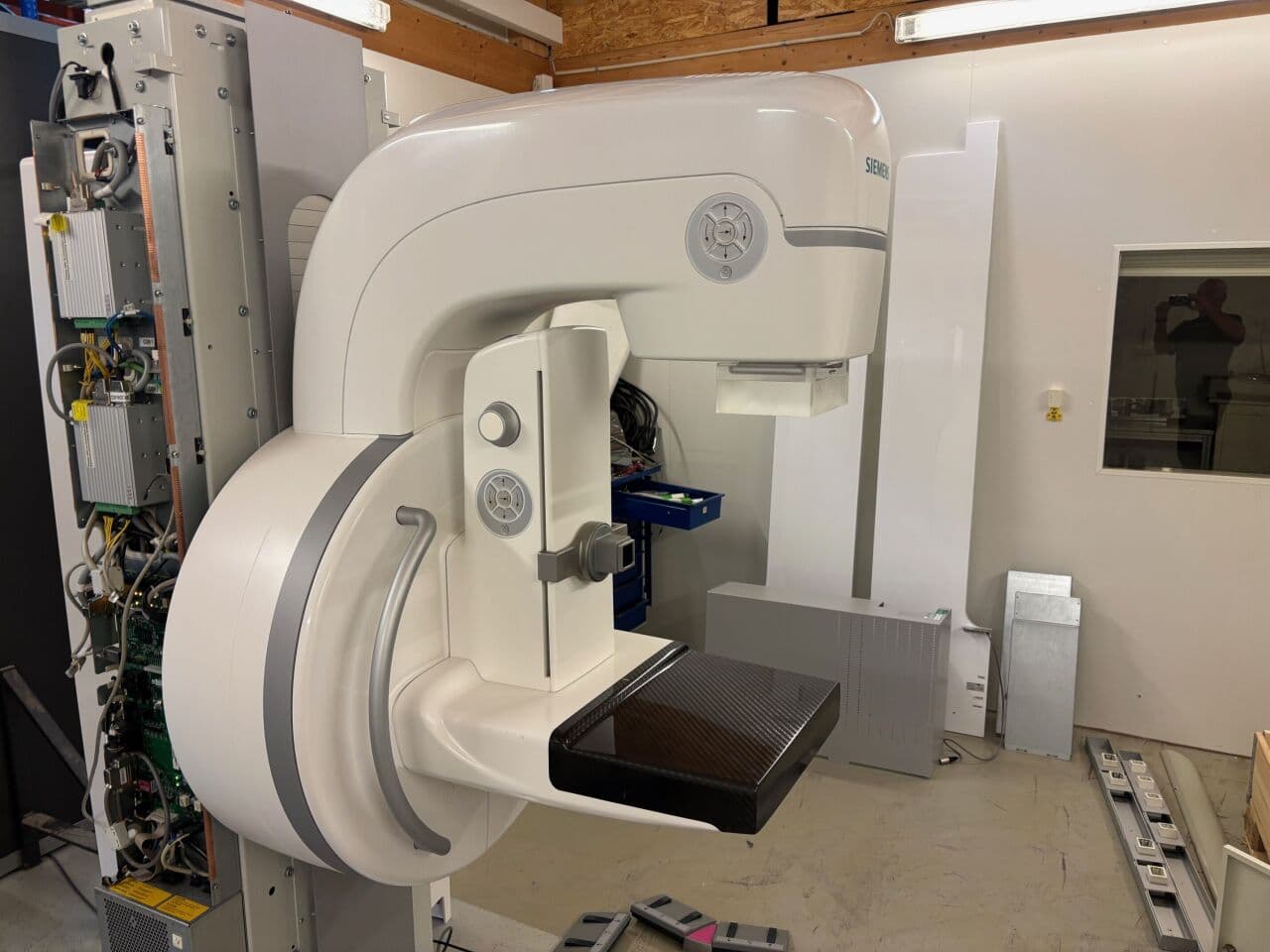
Analog Mammography for Breast Health — Siemens Mammomat 3000 Nova System

Public supplier signals are visible here. Send an inquiry when the listing looks commercially fit.
Product Details
A foundational system for breast imaging centers and hospital radiology departments, the Siemens Mammomat 3000 Nova provides reliable analog mammography for comprehensive women's health screening. It is a well-regarded choice for facilities prioritizing proven film-based imaging technology.
As an analog system, the Mammomat 3000 Nova is engineered to produce high-quality, detailed images on film, a critical factor for diagnostic confidence in breast cancer detection. Its robust construction and established performance have made it a workhorse in clinics around the world.
- Patient-Centered Design: Features optimized compression paddles and positioning aids to enhance patient comfort and cooperation during the exam.
- Efficient Workflow: The system's isocentric rotation and intuitive user interface allow technologists to perform standard views (such as CC and MLO) quickly and accurately.
- Proven Imaging Chain: Integrates a high-performance X-ray tube and generator designed to deliver consistent image quality for screening and diagnostic procedures.
For healthcare providers seeking a cost-effective solution to establish or supplement their mammography services, or for those requiring a dependable analog unit, the Mammomat 3000 Nova offers a trusted platform. It is also a key resource for sourcing components to service existing Siemens mammography installations.
More from ALM International Inc



More in Mammo Unit
Related editorial coverage
Ultrasound Transducer Common Failure Modes: How to Diagnose, Repair, or Replace
Ultrasound probe image problems? Diagnose lens delamination, oil leaks, cable damage & element dropout. Repair vs replace framework + find repair services on MedTrade.
AI Medical Imaging 2026: What the Clinical Data Actually Says
A data-driven look at AI radiology in 2026: the largest RCT ever conducted, why models crash across populations, and the ROI gap no one talks about.